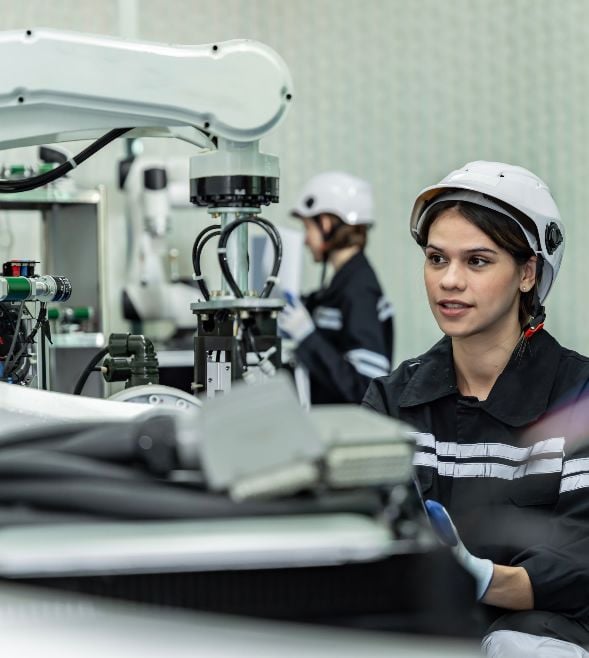
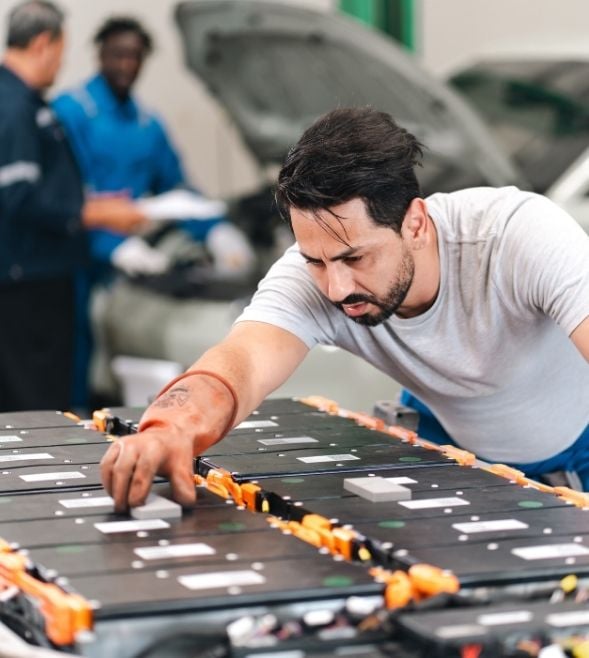
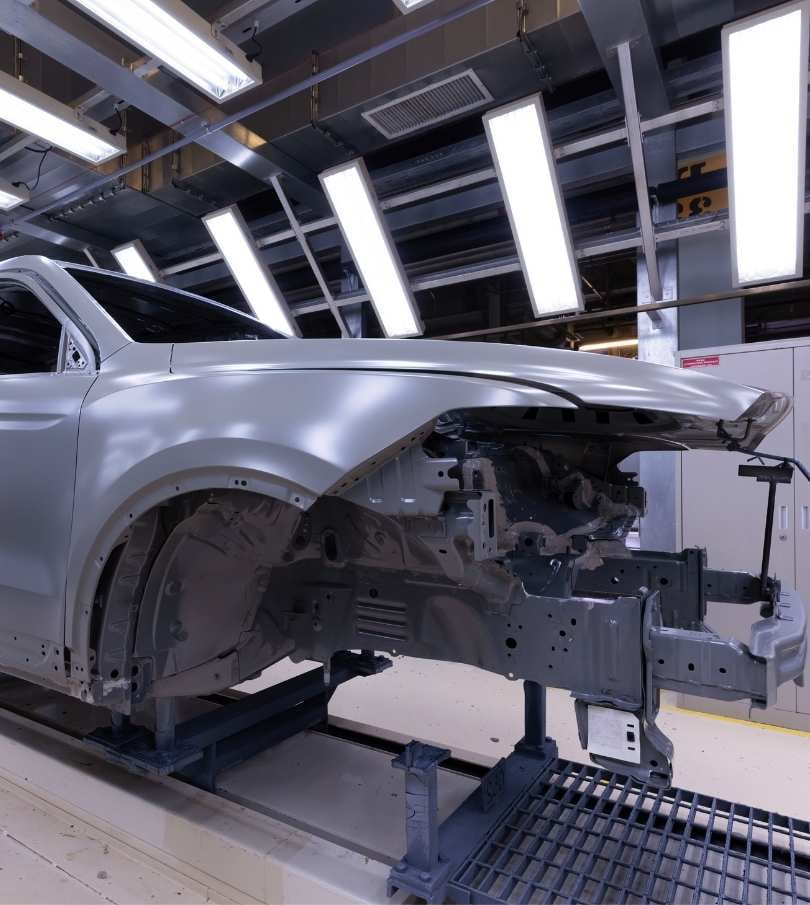
When people think of automotive, they often think of large car factories in Germany, France, Spain or Italy. The Netherlands occupies a different position. Our strength lies less in mass production and more in technology, engineering and systems applied in vehicles, production processes and mobility networks. According to RAI Automotive Industry NL, the Dutch automotive production and supply chain industry has an annual turnover of about 20 billion euros. Nearly 90 percent of that comes from exports.
These figures show that the Dutch automotive industry is larger and more international than its visibility suggests. Germany is the main export market, accounting for 44 percent, followed by the United Kingdom with 26 percent. Belgium, the United States, France and China follow at a distance. As a result, the sector is strongly connected to international value chains and sensitive to economic, technological and political developments outside the Netherlands.
A strong position in technology, not in volume
The Dutch starting position aligns well with the way the automotive sector is changing. Competition is increasingly less about the vehicle itself and more about the technology surrounding it. Batteries, software, data, digital infrastructure, connectivity and smart production systems are increasingly determining where value is created.
RAI Automotive Industry NL therefore focuses its innovation programmes on batteries, digitalisation, manufacturing and materials, and hydrogen. Human capital and international market development are important prerequisites. This focus fits well with the Dutch strength in high-tech manufacturing, electronics, system integration and collaboration between businesses, knowledge institutions and government.
A significant part of the Dutch automotive ecosystem is located in Brainport Eindhoven. According to Brainport, more than half of the Dutch automotive industry is based in this region. The region explicitly focuses on smart, connected, autonomous and sustainable mobility and offers an environment in which new technology can be developed, tested and applied.
Dutch innovation is not limited to passenger cars. Automotive technology also plays a role in freight transport, maritime applications, aviation, energy infrastructure and traffic management. More than sixty Dutch companies are collaborating with the government in three consortia for electrification, hydrogen applications and digital infrastructure. Together, they represent a combined investment of more than 120 million euros.
The domestic market as a testing ground
The Netherlands has another advantage: a domestic market in which new mobility technology is relatively quickly adopted. In August 2026, there were 770,453 fully electric passenger cars on Dutch roads, accounting for 8.2 percent of the total passenger car fleet. In addition, the Netherlands had 66,080 electric light commercial vehicles and 3,081 electric heavy commercial vehicles.
The influx of new electric vehicles is significantly higher than their share in the existing fleet. Up to and including August 2026, 88,783 new electric passenger cars were registered, accounting for 40 percent of new sales. For light commercial vehicles, 79 percent of newly registered vehicles were electric; for heavy commercial vehicles, this share was 11 percent.
The Netherlands also has a strong position in charging infrastructure. The RVO describes the Netherlands as the European leader in electric mobility and one of the countries with the densest charging networks in the world. The Dutch market is now evolving from the initial rollout of public charging points to the next phase, in which availability, quality, user experience, grid capacity and circularity are becoming more important.
This combination of users, infrastructure, knowledge and collaboration makes the Netherlands suitable as a testing ground. New solutions can be tested here not only technically but also in combination with energy, data, regulation and user behaviour. The Digital Infrastructure for Future-proof Mobility programme, for example, shows how mobility, energy, traffic management and digital infrastructure can be interconnected.
Innovation is not yet a market position
The strong technological base offers opportunities but is no guarantee for commercial success. The European automotive industry is under pressure from higher costs, international competition, scarcity of technical talent, and uncertainty about energy, raw materials and regulation. RAI Automotive Industry NL warns that without acceleration, cooperation and clear strategic choices, the Netherlands could lose its innovative position.
The key question is therefore not only whether the Netherlands can innovate, but whether Dutch companies can scale innovations, commercialise them internationally and protect them over the long term. A well-engineered prototype is not yet a scalable product. A successful pilot does not yet generate structural turnover. And technological advantage does not automatically lead to a strong position in international value chains.
For growing technology companies, scaling often starts with substantial investments in product development, people, production facilities, certification and international sales. These investments precede revenue. As a result, during a successful growth phase, cash flow, working capital and financing capacity may come under pressure.
Intellectual property also requires early attention. Collaboration with manufacturers, knowledge institutions and international partners is often necessary but may raise questions about the ownership of data, software, models and technical knowledge. Where is the boundary between co-development and the protection of one’s own market position?
International scale brings new dependencies
The Dutch export strength makes the sector internationally relevant but also creates vulnerability. Germany and the United Kingdom together account for a large share of automotive exports. Changes in production programmes, trade relations, regulation or investment plans in these countries can therefore directly affect Dutch order books.
Moreover, competition from Asia is increasing. Chinese manufacturers compete not only on price but also on development speed, battery systems, software and scale. RAI Automotive Industry NL expects Chinese automotive suppliers to follow European car manufacturers to Europe. This will put not only the vehicle market but also the position of European and Dutch suppliers under further pressure.
Dutch companies will therefore need to make clearer strategic choices about how they differentiate themselves. Not every organisation can take a leading position across the entire chain. A strong market position is more likely to emerge by linking a specific technology, application or competence to international scale and hard-to-replicate knowledge.
From innovation agenda to commercial strategy
For executives, the challenge lies in linking technology and commerce. It starts with a clear answer to five questions:
- Where in the future automotive value chain do we want to create value?
A broad innovation ambition is not enough. Choose technologies and applications in which the organisation can demonstrably stand out.
- Can we scale up the innovation industrially?
Map out the investments needed for production, certification, people, systems and international market access.
- How do we finance the period between development and revenue?
Combine subsidies and public funding with own capital, bank financing and strategic investors.
- Which knowledge do we want to retain ourselves?
Define how intellectual property, data, software and jointly developed technology are protected.
- Which international partners do we need?
Determine where collaboration accelerates progress and where dependency poses a strategic risk.
The Dutch opportunity lies in applicable innovation
The Netherlands does not need to produce the most vehicles to maintain a strong position in automotive. The greatest opportunity lies in technology that makes mobility smarter, cleaner, safer and more scalable. The Dutch combination of high-tech expertise, infrastructure, international orientation and public-private collaboration provides a credible basis for this.
But innovative strength alone is not enough. The winners are companies that can translate technological knowledge into scalable products, international revenue and a defensible position in the value chain. That requires sharp choices in capital, collaboration, intellectual property, production and market access.
The question for Dutch automotive companies is therefore not merely which technology they can develop. The strategic question is: how do we turn Dutch innovation into an international market position?
What can you do now?
For your main innovation, map out the investments, production capacity, partners and intellectual property rights needed to scale up internationally. Link this roadmap to financial scenarios for revenue, cash flow and financing needs. That way, innovation is not a separate R&D project but an integrated part of an executable growth strategy.
Would you like to know what scaling up and internationalisation mean for your financing, organisation and risk profile? Contact us.
Contact us