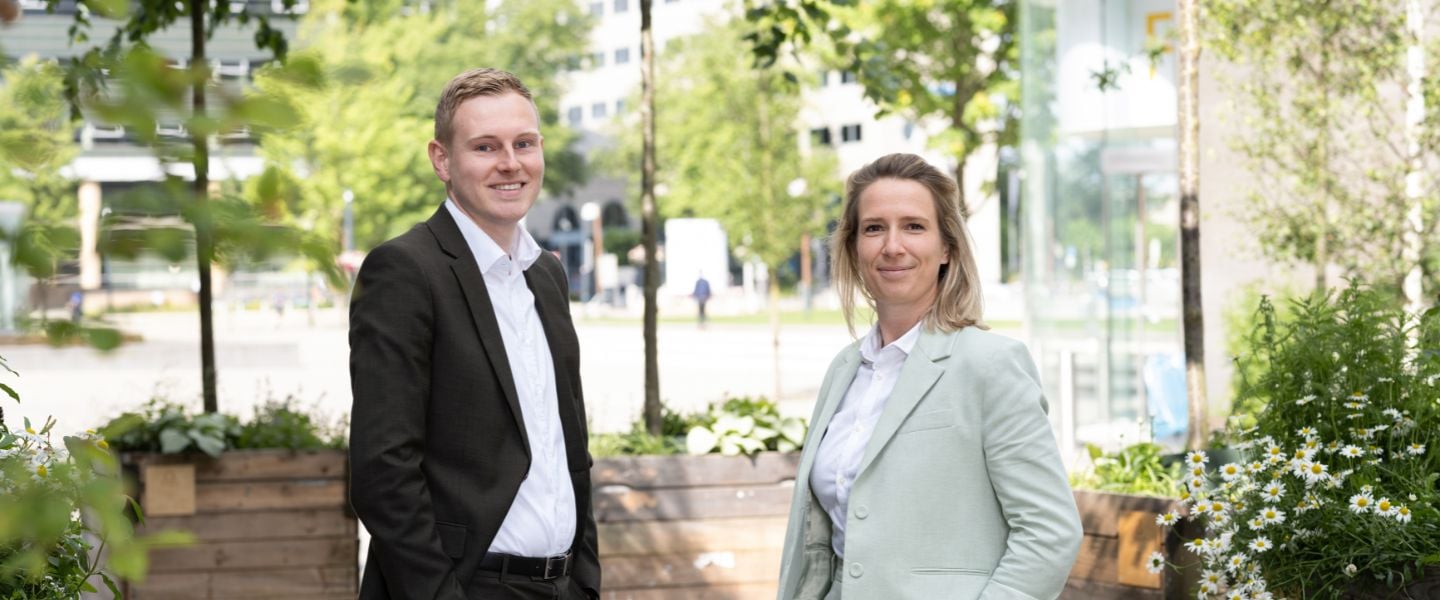
Cooperation based on ‘skills building’
Together with their teams, Kuiken and Plandsoen determined the origin of the different materials and the individual components of the four product types. That is a global exercise. "Sometimes you have to make assumptions," says Kuiken. "In that case, it is good to work with a specialised party that knows the way around all databases and has experience in creating LCAs."
Subsequently, using the measuring method of the GHG protocol, we can calculate the CO2 impact of a certain material. Plandsoen: "The team of Grant Thornton's Impact House was in charge of carrying out the LCAs, but with the aim that the VodafoneZiggo team, too, can complete these types of projects independently in the long term. Skills building is very much part of the collaboration with many of our clients, in order to ensure a lasting and ever greater impact."
Contact with suppliers
Where the origin of a material remained too unclear, suppliers were contacted. Grant Thornton's Impact House and VodafoneZiggo worked together on this. Approaching the chain partners requires sensitivity and is not easy, the two know from experience. Plandsoen understands this: "Some suppliers do not know exactly where the materials used come from. And maybe they do not want to know about that either. And certainly not about what working conditions the materials have been extracted under."
Plandsoen estimates that it will take at least another decade until full chain transparency is mainstream in business. "A shift in mindset is needed. For many organisations, it is still uncomfortable to share information about the origin of materials. From a competitive point of view, that is understandable in some cases. Meanwhile, VodafoneZiggo wants to find it out with the best intentions: together towards a better value chain."