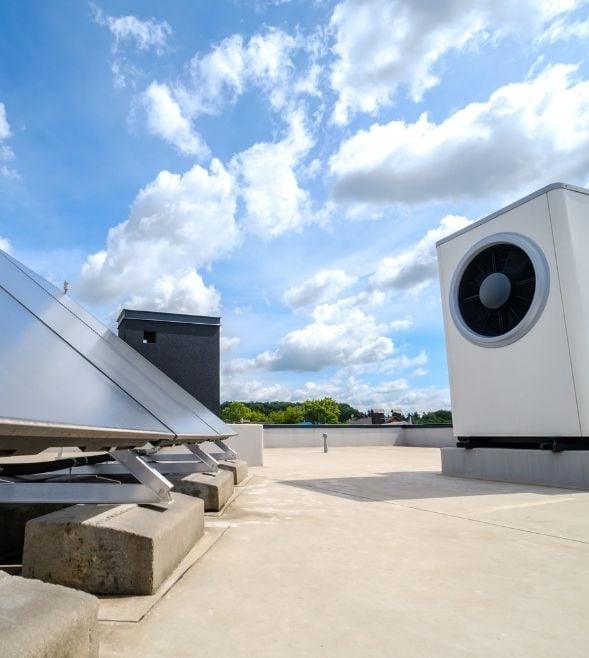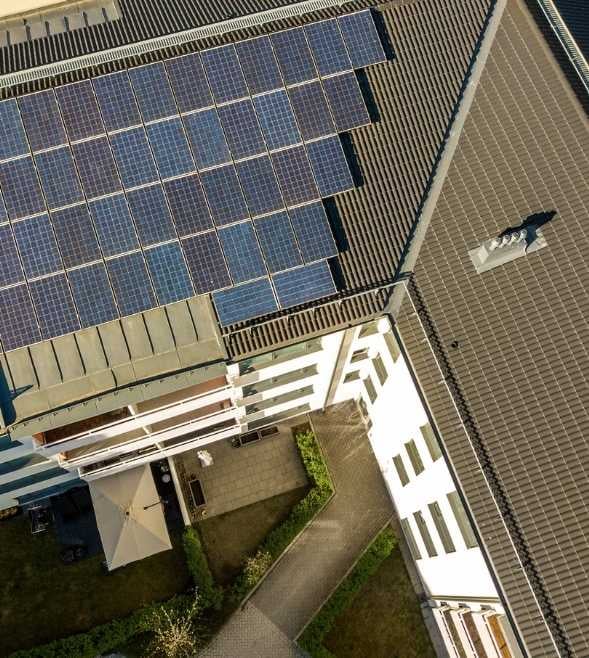
Are you the owner of social real estate? And are you considering investing in making, for example, a school, healthcare institution or sports facility more sustainable? If so, the Sustainable Social Real Estate (DUMAVA) subsidy scheme is highly relevant.
Filter insights by:
Showing 16 of 22 content results
Are you an entrepreneur subject to income tax or corporate income tax? If so, you may be eligible for the Environmental Investment Allowance (MIA). This tax scheme is also available to public-sector organisations, foundations or associations that pay corporate income tax. What conditions do you need to meet, and how do you apply for the MIA? In this article, we will explain it all.
Are you importing goods into the EU? If so, you may face additional obligations under the Regulation on Deforestation Free Products (EUDR). This article explains what you need to know about the regulation and how you can prepare effectively for compliance.
Making a move towards sustainability does not have to be costly. Take a look at some considerable tax facilities the Netherlands provides for investing in environmentally and energy-friendly assets.
Are you considering taking CO₂‑saving measures within your industrial business, but running into high investment costs? Then explore whether you are eligible for the Accelerated climate investments in industry (VEKI) grant.
Is your organisation investing in CO₂ reduction, energy-efficient technologies and renewable energy? If so, you may qualify for the Energy Investment Allowance (EIA): an attractive tax scheme that encourages entrepreneurs to invest in energy-saving or sustainable business assets. With the EIA you do not only benefit from lower energy consumption and emissions, but also from tax relief. In addition, the EIA budget increases each year; in 2026, it amounts to no less than €460 million. Which business assets fall under the EIA, and what conditions must your investment meet?
On September 23rd, the European Commission proposed to delay the EU Deforestation Regulation (EUDR) by another year due to technical issues with the IT system (TRACES) that supports the regulation's compliance processes. In this article we will explain what this delay means for companies and what you can do.
Every Prinsjesdag (Dutch Budget Day), the government presents the Tax Plan outlining proposed fiscal measures for the coming year. This article reflects its current state.
The energy transition is in full swing, and now is the time to get involved. The Dutch government has made €8 billion available for 2026 through the SDE++ subsidy scheme.
This article outlines the key fiscal changes of the tax plan 2026, focusing on corporate income tax, dividend tax, and withholding tax.
After more than two decades, the implementation of the Energy Taxation Directive (‘ETD’) in Dutch law is fast approaching. Originally introduced in 2003, the ETD focusses on taxing energy based on volume. The proposed revision aids in a shift towards climate-aligned taxation. It aims to incentivise the transition to clean energy across the entire European Union.
In December 2023, the parliament approved legislation implementing the European directive (Directive (EU) 2021/2101) on public country-by-country reporting (public CbCR), applicable from the 2021 financial year. An additional decision by the Dutch government on its implementation followed on 1 March 2024.
The European Parliament overwhelmingly approved the ‘stop-the-clock’ portion of the Omnibus proposal on April 3. There were 531 votes in favor, 69 against and 17 abstentions.
Last week, the European Council, which includes heads of government, backed the proposal to postpone mandatory sustainability reporting for large unlisted organisations and listed SMEs by two years (CSRD). Today, the European Parliament agreed to deal with this ‘Stop the Clock’ part of the Omnibus bill under the urgency procedure.
As things stand, 2025 will mark the year that the world is inevitably moving forward with sustainable development and the landscape of tax is changing alongside it. This is why we have comprised a compact overview of the most impactful recent and upcoming changes in Dutch legislation.
The European Commission introduced the ‘Fit for 55-package’: an European Union that is climate-neutral per 2050 and 55 percent less emission of greenhouse gases in 2030 (compared to 1990).