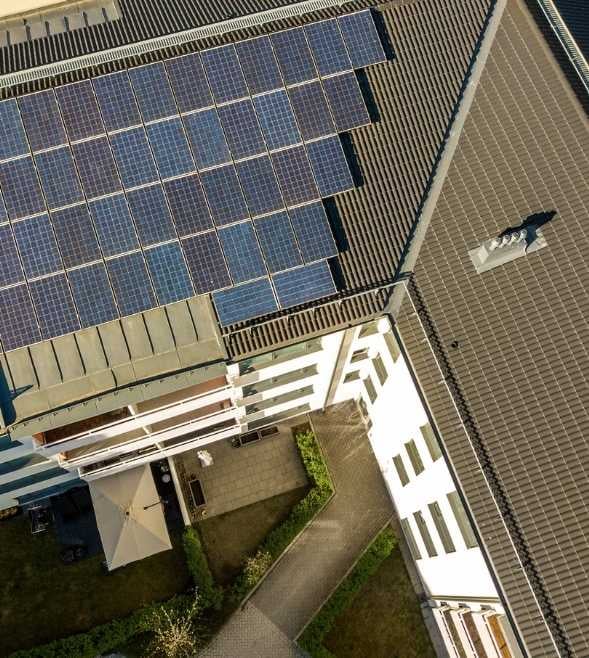
Is your organisation investing in CO₂ reduction, energy-efficient technologies and renewable energy? If so, you may qualify for the Energy Investment Allowance (EIA): an attractive tax scheme that encourages entrepreneurs to invest in energy-saving or sustainable business assets. With the EIA you do not only benefit from lower energy consumption and emissions, but also from tax relief. In addition, the EIA budget increases each year; in 2026, it amounts to no less than €460 million. Which business assets fall under the EIA, and what conditions must your investment meet?
On September 23rd, the European Commission proposed to delay the EU Deforestation Regulation (EUDR) by another year due to technical issues with the IT system (TRACES) that supports the regulation's compliance processes. In this article we will explain what this delay means for companies and what you can do.
Every Prinsjesdag (Dutch Budget Day), the government presents the Tax Plan outlining proposed fiscal measures for the coming year. This article reflects its current state.
The energy transition is in full swing, and now is the time to get involved. The Dutch government has made €8 billion available for 2026 through the SDE++ subsidy scheme.
This article outlines the key fiscal changes of the tax plan 2026, focusing on corporate income tax, dividend tax, and withholding tax.
After more than two decades, the implementation of the Energy Taxation Directive (‘ETD’) in Dutch law is fast approaching. Originally introduced in 2003, the ETD focusses on taxing energy based on volume. The proposed revision aids in a shift towards climate-aligned taxation. It aims to incentivise the transition to clean energy across the entire European Union.
In December 2023, the parliament approved legislation implementing the European directive (Directive (EU) 2021/2101) on public country-by-country reporting (public CbCR), applicable from the 2021 financial year. An additional decision by the Dutch government on its implementation followed on 1 March 2024.
On 15 April 2025, the Dutch regulator for CBAM, the Dutch Emissions Authority, communicated on its website that in 2025, there will no longer be a reporting obligation for importers who import less than 50,000 kg of CBAM goods.
On 26 February 2025, the European Commission introduced the concept of the Omnibus Directive. This also applies to the Carbon Border Adjustment Mechanism (CBAM). In this article you will find a number of the most important proposals.
As things stand, 2025 will mark the year that the world is inevitably moving forward with sustainable development and the landscape of tax is changing alongside it. This is why we have comprised a compact overview of the most impactful recent and upcoming changes in Dutch legislation.
The EU’s Carbon Border Adjustment Mechanism (CBAM) is an instrument that taxes the CO2 emissions of imported goods. The question is whether the CBAM rules apply to your company and, if yes, which points of civil law you will need to take into consideration.
The European Commission introduced the ‘Fit for 55-package’: an European Union that is climate-neutral per 2050 and 55 percent less emission of greenhouse gases in 2030 (compared to 1990).
As the world is transforming quickly, it becomes more important to not only focus on the financials, but also on other stakeholders, including the environment. Forward-thinking companies are already preparing sustainability integration voluntarily recognising the ESG factors, even before such reporting requirements have become obligatory.
Firms are continuously being drawn by the commercial opportunities presented by sustainability. Consumers want to support brands with strong credentials, while investors are increasingly conscious of the long-term value it can provide. As such, companies are increasingly involved in sustainability principles to achieve goals beyond merely enhancing their reputation.
Companies within the scope of CSRD are required to report on material topics transparently. While the CSRD framework does not specifically mention ‘tax’, this does not mean that tax is irrelevant as a reportable entity-specific topic.
The Environmental Investment Allowance is an interesting fiscal scheme, that allows you to invest in environmentally friendly business assets, while benefiting from tax advantages.