The impact strategy was mapped out using the Theory of Change (ToC). This is an instrument that helps in making more impactful choices and in concretising impact objectives. We spoke with Marijke and Marjolein about their experiences. Marijke says: “Developing a Theory of Change led to exciting discussions, but ultimately really moved us forward.”
What is Doenkracht?
Under the name Doenkracht, a.s.r. is committed in various ways to helping people make conscious financial choices. The creation of Doenkracht happened very naturally. The former programme of a.s.r. was in the process of redefining its objectives and wanted to focus even more on financial resilience. At the same time, Aegon Nederland had just gained valuable insights from the programme Stap Vooruit, about what does and does not work in increasing financial resilience. Doenkracht uses those lessons and builds on the successes. Marjolein: “Fortunately, the full stop we put after Stap Vooruit at the time has become a comma.”
Theory of Change for impactful choices
Shortly after the merger of the two social programmes, Impact House supported a.s.r. in developing a Theory of Change (ToC). The ToC model is intended to enable structured thinking about the objectives to be achieved and what is and is not done to reach them. It is, as it were, a route map for achieving change (impact), based on practical knowledge and literature.
The ToC is a steering tool for more impactful choices, a solid basis for measuring impact and helps in telling the impact story. Marijke: “We experienced the development of the ToC as a very valuable journey. The instrument helps with writing a strategy, and subsequently with making choices.”
Simone de Wit from Impact House recognises this: “In our practice, we notice that for impact financiers and programmes it can be quite complex to make sharp, well-substantiated choices for activities, initiatives or projects. Many choices are based on emotions or gut feeling. A ToC helps to better substantiate those choices. Clear impact objectives and strategies are formulated, which makes it easier to assess to what extent applicants align with them.” Marjolein and Marijke confirm this: “We also shared our theory of change with our partners, so that our process is recognisable to them and we find greater alignment with one another.”
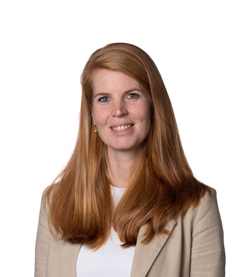
Marjolein Breed
“Changing the organisation from within, by asking questions, continuing to be curious and focusing on the bigger picture. That is how I try to contribute to making better financial choices.”
A well-considered strategy
Marjolein had already experienced a similar process – working out a ToC – at Aegon Nederland. “At Doenkracht, more people were involved than was the case with Stap Vooruit at the time. As a result, it took longer before we were all aligned. Nevertheless, it is a great added value to go through this process together from the very beginning. Doenkracht has become a jointly supported impact story, which we can all explain clearly in our own words.”
Marjolein is very satisfied with the collaboration between both companies and Impact House: “I am proud that a.s.r. continued both the programme and this approach together with Impact House. That felt very positive, as if I stepped onto a moving train.”
What insights does she share with organisations that want to develop a theory of change? “Take the time to properly understand it together and dare to challenge one another critically on what you do and do not (or no longer) do. Do not be put off too quickly by terminology and theory. It is worth it.”
Marijke recognises this and adds: “Involve the people who will later work with it as well. That helps in making strategic choices along the further route, and in keeping one another on track. From within the organisation, I received the comment: Your impact strategy really sounds very well thought through. And it is! We achieved that together.”
A fitting impact strategy
One of a.s.r.’s strategic objectives is financial resilience: ensuring that people do not get into debt, helping them get out of debt, and supporting them in making financial choices. Doenkracht has aligned its own objectives and strategy with that mission. Impact House knows from experience that this contributes to greater legitimacy for programmes and better positioning of the team and activities within the organisation.
For example, many a.s.r. employees register via Doenkracht as volunteers to give guest lessons in financial education. Marijke: “We deliberately chose to continue focusing on the theme of financial resilience. This is the core of what we do, this is where our expertise lies and where we can therefore make the greatest impact. That also feels logical for our stakeholders; they recognise our language. Financial resilience is very much part of who we are, and that makes it strong.”
Marijke Troost
“It is distressing that in the Netherlands we still do not sufficiently succeed in helping people out of financial difficulties and keeping them out. I am therefore pleased and motivated that, from my role, I can contribute to resources and care that can be life-changing.”
Measuring and improving impact
Not only the ToC itself, but also the lessons from the impact measurement of Stap Vooruit helped in making more impactful choices. For example, that partner organisations of Stap Vooruit with a comparable mission, approach and target group were better able to work together and learn from one another. “We paid close attention to this in the selection of partner organisations for Doenkracht, so that the programme can be even more effective,” Marijke explains.
Another recommendation from the impact measurement concerns providing sustainable financing to partner organisations, rather than one-off or short-term funding. This contributes to more peace of mind and space for partners to experiment and to use insights to improve, scale up or make activities more sustainable. Marjolein: “We go for partnership. Our partners have their own methods and vision. We work with them because we believe in the work they do.”
Marijke adds: “In doing so, we opt for a multi-year commitment: we have learned that it takes time to embark on a good path together. The first year is about getting used to each other, getting to know one another and pioneering together. It is only in the second or third year that you really reap the benefits.”
Soon, Doenkracht will start an impact measurement among partner organisations and their participants. This will examine the effect of a.s.r.’s support on the selected partners and the contribution to greater financial resilience. Marijke: “Because partner organisations will further shape their own impact measurement this year, I expect that they will gain even better insight into their own strength. This will enable us to make even better use of it and help more people become financially resilient.”
Do you want to know more?
Contact us