Pay transparency in motion
EUPTD
The Pay Transparency Directive is coming and fundamentally changes how organisations deal with remuneration.
Filter insights by:

The Pay Transparency Directive is coming and fundamentally changes how organisations deal with remuneration.

Making an impact is no longer the exclusive domain of foundations, non-profits or philanthropic funds.

Employee participation has moved to the centre stage in the Dutch mid-market and scale-up landscape.



Are you an entrepreneur subject to income tax or corporate income tax? If so, you may be eligible for the Environmental Investment Allowance (MIA). This tax scheme is also available to public-sector organisations, foundations or associations that pay corporate income tax. What conditions do you need to meet, and how do you apply for the MIA? In this article, we will explain it all.


Sustainability has become an essential part of marketing and corporate communication in recent years. At the same time, the market has become flooded with self invented sustainability labels and vague terms such as “eco friendly”, “sustainable”, “biobased” and “green”.

To determine whether pay differences exist within the international engineering consultancy, Grant Thornton helped Iv gain valuable insight through a detailed pay gap analysis. Anne-Fleur Vernhout and Tom van Mierlo of Grant Thornton speak with HR manager Joke Walta of Iv. “You cannot rely solely on the feeling that everyone is treated equally. Insight is needed.”

Are you importing goods into the EU? If so, you may face additional obligations under the Regulation on Deforestation Free Products (EUDR). This article explains what you need to know about the regulation and how you can prepare effectively for compliance.



On 26 January 2026, the Dutch Ministry of Finance published a report on the introduction of e-invoicing in the Neth-erlands. The report recommends that the Netherlands introduces e-invoicing not only for EU cross-border transac-tions, but also for domestic transactions.

Making a move towards sustainability does not have to be costly. Take a look at some considerable tax facilities the Netherlands provides for investing in environmentally and energy-friendly assets.

Are you considering taking CO₂‑saving measures within your industrial business, but running into high investment costs? Then explore whether you are eligible for the Accelerated climate investments in industry (VEKI) grant.

The Dutch Tax and Customs Administration will switch to a new bank as of 1 May 2026. As a result of this change, the bank account number used by the Dutch Tax and Customs Administration for payments and refunds will change. Whether or not you need to make any adjustments depends on how you arrange your payments to the Dutch Tax and Customs Administration.


When a Dutch company distributes dividends, it is in principle required to withhold 15 % dividend withholding tax on the gross dividend. However, under certain conditions the Dutch law provides for a withholding tax exemption on dividends to non resident shareholders. In this article we will explain more about how this works.


As a result of the 2026 conflict in the Middle East, multinational companies are tackling how to manage their international employees across the region, both assignees and local hires.

Employee participation has moved to the centre stage in the Dutch mid-market and scale-up landscape.

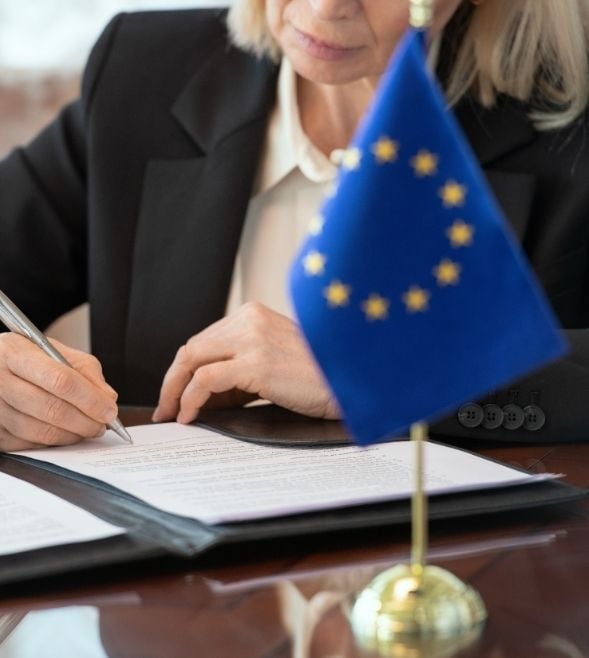
The European Commission is preparing an “omnibus directive” on direct taxation, expected in June 2026. This is not a new tax initiative, but an effort to review and streamline how existing EU direct tax rules operate together in practice.



The EBA Guidelines on the management of Environmental, Social and Governance (ESG) risks have been in effect for all Significant Institutions since 11 January 2026.


On 10 March 2026, the European Parliament adopted the EU Talent Pool Regulation. The Regulation introduces a new EU-wide digital platform designed to help employers find talent from outside the EU.


Sustainability is increasingly becoming an integral part of strategic ambitions. ESG benchmarking is developing into a valuable strategic tool for strategy, innovation and stakeholder trust in this playing field.